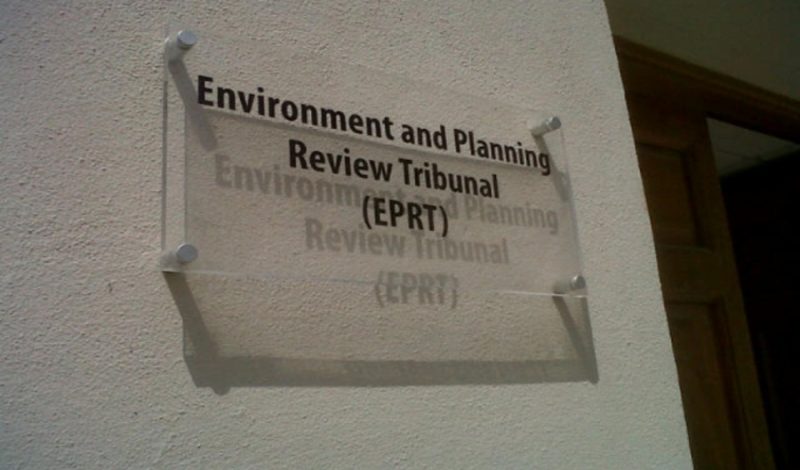
The Environment and Planning Review Tribunal (EPRT) is not a forum for rewriting the rules or questioning the validity of laws, policies, and plans. The Court of Appeal left no room for doubt in Moviment Graffitti et al. v L-Awtorita’ tal-Ippjanar u Titan Developments Limited (2024). In that case, the Court stated emphatically: “It-Tribunal m’huwiex il-forum fejn tisfida legislazzjoni.” (The Tribunal is not the forum for challenging legislation.) This was not just a passing comment. It was a clear message about the Tribunal’s function: to review decisions, not to question the laws underpinning them.
In the same case, the Court noted: “L.S. 549.46 taghti parametri fejn ghandu jintalab EIA u f’dan il-kaz l-izvilupp ma jaqax f’dawn il-parametri. Jekk it-traspozizzjoni tad-Direttiva fil-ligi domestika ma lahqitx l-ghan mitlub mid-Direttiva, tali lanjanza ma tistax issir f’dan il-forum.” (L.S. 549.46 sets parameters for when an EIA is required, and in this case, the development does not fall within those parameters. If the transposition of the Directive into domestic law has failed to achieve the Directive’s objectives, such deficiencies cannot be addressed in this forum.)
This underscores a vital point: the Tribunal is not a substitute for legislative reform. If laws are flawed or poorly transposed, the remedy lies elsewhere—in Parliament, or in a court of constitutional jurisdiction, not in the Tribunal.
The Tribunal also cannot choose to disregard a policy simply because it seems flawed or unjust. The Court of Appeal made this clear in Mark Laferla Jr. v L-Awtorita tal-Ippjanar u MGF Ltd (2023), stating: “L-Awtorita’ ma tistax ma tuzax policy ghax jidhrilha li hija zbaljata.” (The Authority cannot disregard a policy simply because it considers it flawed.)
In the same case, the Court dealt specifically with the DC2015 policy, which had been in force since 16 November 2015. It ruled: “Il-policy DC2015 dahlet fis-sehh fis-16 ta’ Novembru 2015 u ghalhekk it-Tribunal kien marbut li jikkunsidra lment relatat ma’ tali policy kif inhi fis-sehh. Ma ghandu ebda setgha li jirrevedi mhux id-decizjoni izda l-validita tal-istess policy.” (The DC2015 policy came into force on 16 November 2015, and the Tribunal was therefore bound to consider complaints related to that policy as it stood. It does not have the power to review the validity of the policy itself.)
This ruling is a reminder that the Tribunal must apply the rules as they are written, even if it (hypothetically) disagrees with them. Policies, no matter how contentious, are part of the legal framework the Tribunal is tasked to enforce.
What happens when someone wants to challenge the validity of a law or policy? Clearly, the Tribunal is not the place for that. Even the term “zball ta’ ligi” (error in law), as referenced in Article 11 of Chapter 552, cannot be interpreted to mean that the EPRT has jurisdiction to review legislative acts. As the Court in Mark Laferla Jr. (2023) explained: “il-kliem ‘zball ta’ ligi’ … mhux fejn qed tigi attakkata il-validita ta’ ligi.” (The term “error in law” … does not extend to challenges against the validity of a law.) Clearly, the Tribunal’s limited jurisdiction is there to ensure compliance with the law, not to rewrite or invalidate it.
Why These Limits Matter
The Tribunal’s jurisdiction is not just a legal technicality—it is a vital safeguard. By sticking to its defined role, the Tribunal ensures that it remains an impartial adjudicator. If it were to stray into questioning the validity of laws or policies, it would risk undermining its own authority and disrupting the balance between legislative, executive, and judicial functions.
For those who wish to challenge laws or policies, there are appropriate avenues. Constitutional challenges under Article 116 offer remedies for those seeking to address ultra vires enactments. This may frustrate some, particularly in cases where laws or policies are in breach of higher laws. Yet, that is the job of legislators. The Tribunal cannot fix the rules.