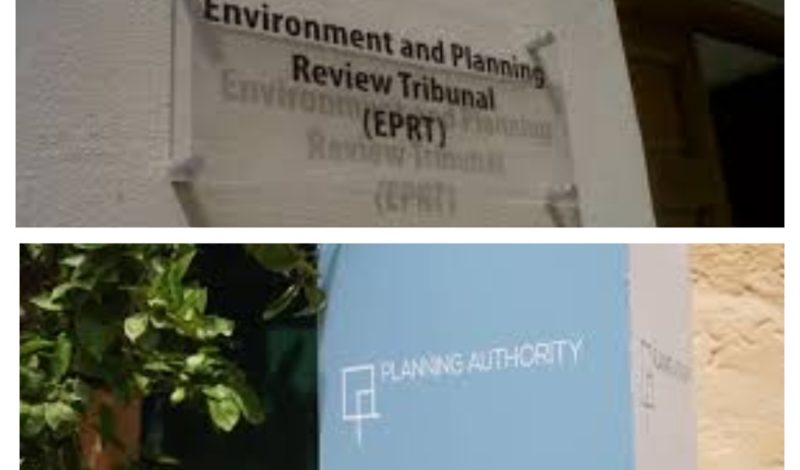
There is a quiet irony in the judgment delivered by the Court of Appeal on 4 May 2026 in Ludwig Camilleri v. L-Awtorità tal-Ippjanar. Planning law usually speaks in neat institutional categories. The Planning Authority decides applications. The Environment and Planning Review Tribunal reviews those decisions. The Court of Appeal intervenes on points of law. Each institution has its place. Each function has its boundary. Yet this judgment reminds us that procedure does not always obey the elegance of theory.
The case concerned an application for the proposed relocation of a kerb-side fuel station to Triq l-Imdina, Attard. The procedural history was already long and rather tortured: a refusal by the Authority, an appeal before the Tribunal, a first appeal to the Court, a remittal, a second decision by the Tribunal, another appeal to the Court, and then a further remittal. The central difficulty was that, after amendments to the proposal, certain clearances or consultations from external entities had not been obtained. The earlier appellate judgment had therefore directed that the matter return to the Tribunal so that the appeal could be reconsidered after those clearances were requested.
The words used by the Court in the earlier judgment were important:
“l-atti jigu rimessi lit-Tribunal biex jerga’ jikkunsidra l-appell wara li jintalbu mill-gdid il-clearances tal-entitajiet koncernati u b’hekk it-Tribunal ikun f’pozizzjoni jqis ahjar jekk ir-rifjut ghandux jigi konfermat.”
[Translation: “the acts are to be remitted to the Tribunal so that it may reconsider the appeal after the clearances of the concerned entities are requested again, so that the Tribunal will be in a better position to assess whether the refusal should be confirmed.”]
That sentence became the key to the whole dispute. The Tribunal took the view that the application should go back to the Planning Authority so that the consultations and the necessary analysis could be carried out there. On one level, that appeared logical. Consultations are normally part of the processing of a planning application. They usually inform the Authority’s first-instance determination. If something was missing from that stage, one might instinctively think that the file should return to the Authority.
But the Court disagreed. It held that the previous judgment had not annulled the Authority’s refusal decision and had not restarted the whole application process. The appeal was still alive. The matter had been remitted to the Tribunal so that the same appeal could be reconsidered. If the file were sent back to the Authority, the Court reasoned, the original appeal would effectively disappear, and any later challenge would be a new appeal arising from a new decision. That was not what the earlier judgment had ordered.
The Court therefore treated the Tribunal as the body which had to complete the missing procedural step. Article 30(1) of the Act regulating the Tribunal became central. The judgment quotes the provision as follows:
“It-Tribunal jista’ jitlob kull dipartiment jew aġenzija tal-Gvern sabiex jipprovdi lit-Tribunal dik l-informazzjoni li t-Tribunal jidhirlu meħtieġa għall-eżekuzzjoni xierqa tal-funzjonijiet tiegħu.”
[Translation: “The Tribunal may request any department or agency of Government to provide the Tribunal with such information as the Tribunal considers necessary for the proper execution of its functions.”]
The Authority tried to draw a distinction between “information” and “consultation”. The Court rejected that distinction. It held that the word “information” was wide enough to include consultations, because consultations are a form of knowledge which enlightens the decision-maker on a particular issue. The Court stated:
“L-użu tal-kelma ‘informazzjoni’ tirreferi għal kull tagħrif li permezz tiegħu min jirċevih ikun ġie lluminat dwar xi kwistjoni partikolari. Mingħajr dubju ta’ xejn, konsultazzjonijiet jidħlu f’dik it-tifsira, u għalhekk ukoll jistgħu jintalbu bis-saħħa tal-artikolu 30(1).”
[Translation: “The use of the word ‘information’ refers to every form of knowledge by means of which the person receiving it is enlightened on a particular issue. Without any doubt, consultations fall within that meaning and may therefore also be requested by virtue of article 30(1).”]
This is where the judgment becomes particularly interesting. The Court was careful to preserve the formal boundary. It expressly stated:
“Dan ma jfissirx li t-Tribunal għandu jibda jagħmel xogħol l-Awtorità.”
[Translation: “This does not mean that the Tribunal should start doing the work of the Authority.”]
Yet, in practical terms, the Court accepted that the Tribunal could and should obtain the very consultations which would normally form part of the Authority’s own first-instance assessment. The Court did not say that the Tribunal had become the Planning Authority. But it did accept that, in the particular circumstances of the case, the Tribunal had to do something which looks very much like part of the original planning process.
That is the irony. The Tribunal remains appellate in name and jurisdiction. It is not generally transformed into a planning directorate. It is not given a roving power to process applications as though it were the Authority. But where an appeal is already pending, where the Court has ordered the Tribunal to reconsider that appeal, and where the missing material is necessary for that reconsideration, the Tribunal may have to gather the material itself. The label remains appellate; the function begins to acquire a first-instance flavour.
This does not mean that the judgment is wrong. On the contrary, it avoids a procedural absurdity. Had the file been sent back to the Authority, the applicant might have been dragged into a fresh administrative cycle, possibly under a changed policy environment, even though the Court had intended the existing appeal to be reconsidered. The Court’s solution preserves the appeal and prevents remittal from becoming a disguised restart of the entire planning process.
But the judgment also leaves behind a serious uncertainty. Where does the line stop? At what point does the Tribunal merely complete the evidential record, and at what point does it begin to determine the application as though it were the Authority of first instance?
That question is not academic. If the Tribunal asks an entity for a clearance and the entity simply replies that it has no objection, the exercise may remain comfortably procedural. But what if the consultation raises new planning concerns? What if it requires technical changes? What if it calls for amended drawings, fresh mitigation measures, new conditions, or further reactions from third parties? What if the consultation alters the planning balance so significantly that the Tribunal is no longer merely reviewing the refusal, but is effectively carrying out the assessment which the Authority should have carried out before deciding?
The Court gives the Tribunal a tool, but not a fully defined boundary. It tells us that “information” may include “consultation”. It tells us that the Tribunal must not do the Authority’s work. But it does not fully explain when one becomes the other. That is the difficult part. The more the Tribunal is required to complete what was missing below, the harder it becomes to maintain that it is only reviewing what the Authority did. Completion may be necessary. But completion is not always neutral. Sometimes, to complete the record is to influence the substance of the decision.
The better reading is that the Tribunal may act only so far as the exercise remains tied to the same pending appeal, the same essential proposal, and the same refusal under challenge. It may obtain material needed to decide whether that refusal should stand. But once the exercise requires a materially fresh appraisal of the development, or a new planning judgment on a substantially altered proposal, the matter risks crossing from appellate review into first-instance determination.
This judgment therefore exposes a tension at the heart of planning appeals. A Tribunal must have enough procedural power to prevent appeals from collapsing into technical incompleteness. But it must not become a substitute Planning Authority. It may ask for the missing consultation; it may use that consultation to decide the appeal; but it must remain alert to the moment when the process ceases to be a review of the refusal and becomes a new determination of the application.
That is why this judgment matters. It is not merely about a fuel station, or about Article 30(1), or about whether the word “information” includes “consultation”. It is about the uncertain border between review and determination. The Court insists that the Tribunal is not doing the Authority’s work. Yet it accepts that, in some cases, the Tribunal must do enough of that work to make the appeal legally workable.
So the final lesson is a subtle one. The Tribunal is not the Planning Authority. But, it may become the place where the planning assessment is finally completed. The real question – to which I have no answer – is where completion ends and first-instance planning begins.