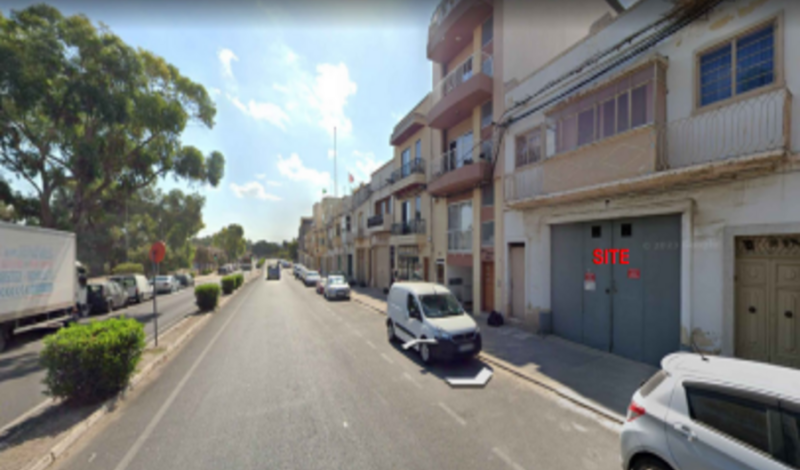
An issue worth recalling is how rigid policy thresholds can, in exceptional cases, give way to more context-sensitive planning reasoning. In Lorenzo Erba vs L-Awtorità tal-Ippjanar (Appell 334/24JB, PA2599/24, 17 ta’ Ġunju 2025), the applicant successfully obtained permission for a public service garage accommodating twelve vehicles, despite the explicit capping of five set out in Policy P24 of DC15. The legal and factual route taken offers instructive guidance for future cases where proposals exceed numerical restrictions.
The starting point is the policy itself, which reads:
“In Residential Areas public service vehicles may be garaged within parking areas dedicated to residential parking only if: […] there will be a maximum capping of 5 parking spaces allocated for such vehicles.”
Indeed, the Planning Authority had this to say:
“għalkemm iż-żona tal-madwar hija ‘of mixed use character’, il-provediment ta’ 12-il spazju ta’ parkeġġ għal public service vehicles huwa ikkunsidrat bħala eċċessiv u ma jkunx fl-aqwa interess tal-propjetajiet residenzjali fil-madwar”
[Although the surrounding area has a ‘mixed use character,’ the provision of 12 parking spaces for public service vehicles is considered excessive and not in the best interests of nearby residential properties.]
Still, the Tribunal drew heavily on the Flexibility Policy, which allows justified departures from detailed planning provisions when the planning context warrants it. Quoting this policy:
“MEPA may consider justifiable departures from policies which can be adequately justified from a planning perspective […] on a site which is a legitimately established business outlet.”
Applying this, the Tribunal concluded:
“ġialadarba hemm livell konsiderevoli ta’ commitments leġittimi huwa ġġustifikat dipartenza mill-policies viġenti.”
[Since there is a considerable level of legitimate commitments, a departure from current policies is justified.]
In fact, the Tribunal took this route after the appellant ‘wisely’ reframed the case beyond numbers. He presented a detailed evidentiary picture of the surrounding area, showing that the actual character of the street was not purely residential, but already saturated with commercial commitments. The Tribunal accepted this argument:
“mill-analiżi tal-permessi preżentati mill-appellant, joħroġ ċar li hemm predominanza ta’ stabbilimenti ta’ natura kummerċjali fiż-żona li jservu bħala commitments validi.”
[From the analysis of permits submitted by the appellant, it is clear that there is a predominance of commercial establishments in the area which serve as valid commitments.]
The Tribunal also emphasised that statutory interpretation under Article 72(2) of the Development Planning Act requires a broader lens:
“l-Artikolu 72(2) […] jirrikjedi li l-analiżi u d-deċiżjoni jieħdu kunsiderazzjoni t’elementi u kwistjonijiet oħrajn relevanti.”
[Article 72(2) […] requires that the analysis and decision take into account other relevant matters and considerations.]
Critically, the Tribunal accepted the argument that the proposed garage—limited to light public service vehicles such as Y-plate cars and small vans—would be less disruptive than nearby retail or office uses, and would not generate disproportionate traffic or nuisance:
“huwa antiċipat li l-attivita’ fuq is-sit tkun ferm iktar ikkontrollata, ġialadarba s-sit huwa previst li jintuża biss għall-ipparkjar tal-vetturi.”
[It is anticipated that the activity on site will be far more controlled, since it is intended solely for the parking of vehicles.]
The takeaway?
Merely quoting policies is not enough. Success comes from a strategic blend of policy interpretation, commitment analysis, flexibility provisions, and a robust factual presentation of the planning context.