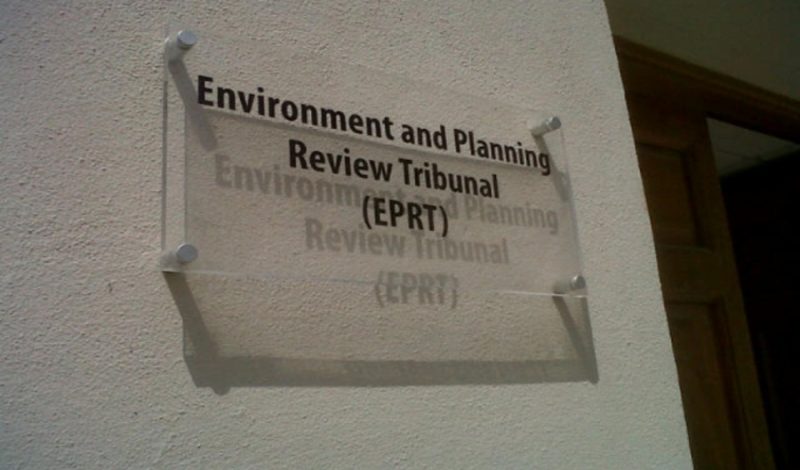
This blog is not being written out of any personal favour for Mr Joseph Borg, the incumbent chairman of the Environment and Planning Review Tribunal (EPRT). I have to admit, there are times when my insistence during the sittings he presides over can be quite unbearable, prompting him to stop me in a rather abrupt manner. However, I continue to unequivocally defend him against any attempt to taint his integrity and allegation of bias, such as those reported in this article. (“Independent Planning Review Tribunal Chairman is a PA Employee“)
Indeed, recent court developments have vindicated my position.
In a landmark ruling delivered earlier this week by the Civil Court (First Hall) in the case of Kunsill Lokali Gżira vs Tribunal ta’ Reviżjoni tal-Ambjent u l-Ippjanar and Avukat tal-Istat, the critical issue of bias allegations against Borg was brought to the forefront.. The allegation asserted that, as evidenced by the Government Gazette, Borg had been appointed Chairman of the Tribunal ta’ Reviżjoni tal-Ambjent u l-Ippjanar on February 20, 2020, with the appointment taking effect retroactively from February 13, 2020—a time when he was still actively employed with the Planning Authority.
In her judgment, however, Judge Hayman not only dismissed all allegations but also set a significant precedent by articulating her decision through sound legal principles, which, until now, had not been so intelligibly discussed in Maltese jurisprudence in the field of planning law.
In discussing the threshold for establishing bias, the Court carefully applied the test for apparent bias, which asks whether “a fair-minded and informed observer” would perceive a real possibility of bias. Judge Hayman concluded that although Borg was employed by the Planning Authority, it emerged that he had relinquished any active role within the Authority upon being granted unpaid leave. Furthermore, it was clearly established that no part of his income during his tenure with the Tribunal was provided by the Authority. Consequently, there was no indication that he was subject to any financial pressure from this connection.
Central to the Court’s reasoning was also the fact that Borg’s connection to the Planning Authority was entirely passive and incapable of exerting any influence over him. There was no evidence to suggest that he was under any form of influence, that his decisions were affected as a result, or that he had any actual conflict of interest. This conclusion was reinforced by the fact that the decision in question was subsequently confirmed on appeal.
In addition, the Court, in a clear and reasoned manner, also addressed the principle of objective impartiality as applied to the case at hand. It emphasized that this concept cannot be stretched to the extent that a tribunal member is removed or a valid decision invalidated simply because a decision was unfavourable to a party or due to a speculative or hypothetical perception of bias. The Court warned that nullifying valid decisions solely on the basis of such speculative notions would lead to the unwarranted rejection of lawful and proper judgments. Here, the Court underscored that the examination of objective perceptions—anchored in the principle “justice must be seen to be done”—must be approached with serious and thoughtful consideration. It categorically rejected the idea that this assessment could be influenced by what it referred to as a “fleeting thought,” where mere subjective impressions or unsubstantiated assumptions are mistaken for genuine indications of partiality. Such an approach, the Court reasoned, would undermine the credibility and stability of decision-making processes.
This judgment not only serves to vindicate me. It represents the importance of exercising restraint when alleging bias. The underlying lesson is clear: while impartiality remains a fundamental cornerstone of the rule of law, unwarranted and excessive suspicion threatens to destabilize the very structures that uphold it.