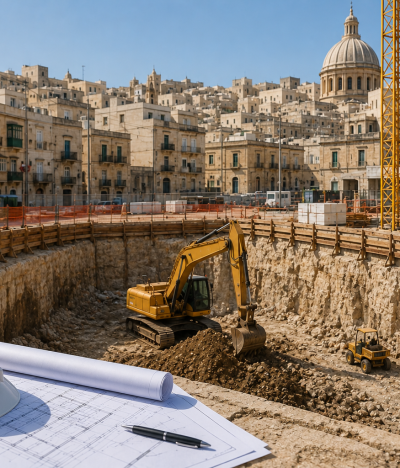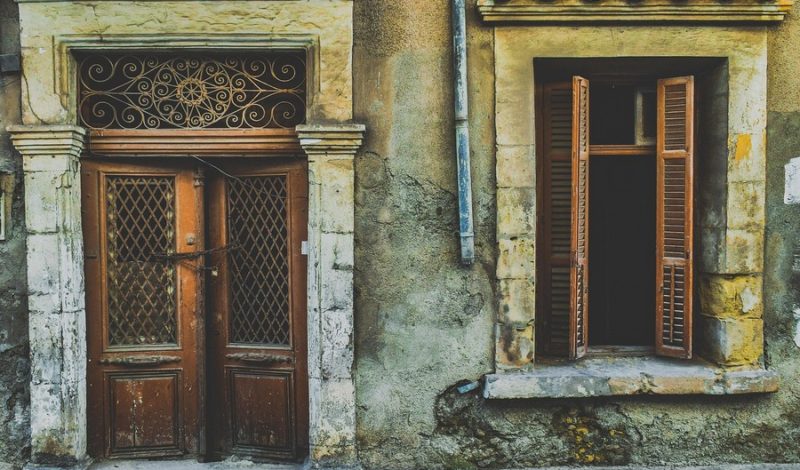
In Maltese civil law, light-related servitudes are often invoked but rarely understood with the doctrinal precision they require. The distinction between servitus luminum and servitus ne luminibus officiatur is particularly significant, as it determines whether a neighbouring owner may lawfully build near a window or whether any form of interference with light is absolutely prohibited. Though both servitudes relate to the admission of light through an aperture, they are governed by fundamentally different rules, both in terms of acquisition and legal consequence.
Servitus luminum is a right to receive light through an aperture in a wall adjoining or facing a neighbouring tenement. It is a continuous and apparent servitude, meaning it may be acquired not only by express title but also by prescription, provided that the use has been open, uninterrupted, and visible for the requisite legal period. It arises most commonly where a window has existed for years without objection, suggesting a settled legal relationship between the two properties. However, the right it confers is ‘qualified’ (or, rather, ‘limited’): the owner of the servient tenement may still build or carry out works on their property, so long as the result is not a serious and appreciable reduction in light. Indeed, court judgments suggest that the prjudice requires not mere inconvenience but demonstrable harm—a preġudizzju valutabbli—to the enjoyment or utility of the dominant tenement. Indeed, Article 474(1) of the Civil Code prohibits only those acts by the servient owner that materially impair or render more burdensome the exercise of the servitude. Meanwhile, Article 476 provides that where uncertainty arises as to the scope of the servitude, it must be construed narrowly, taking into account the original destination of the dominant tenement and ensuring the least possible prejudice to the servient property. Ultimately, it falls to the court to determine whether the impugned works amount to a preġudizzju valutabbli—a legally cognisable and appreciable diminution of the right, rather than a trivial or subjective inconvenience.
Servitus ne luminibus officiatur, by contrast, imposes a far stricter obligation. It is a non-apparent and discontinuous servitude, and thus can only be constituted by title, never through long-standing use or visibility. Once established, it prohibits the servient owner from engaging in any act that would diminish the dominant tenement’s light, however slight. This may include building upwards, extending sideways, or even planting trees that obstruct illumination. The servitude is fundamentally preventive in nature—it protects the enjoyment of light in its entirety, not merely against material harm. Classical sources such as Voet and Pacifici Mazzoni emphasise that the breach occurs not only when actual damage is caused but when the physical condition of full illumination is interfered with in any measurable way. In effect, the servitude operates much like a prohibition on elevation (altius non tollendi), disallowing any construction that compromises existing light, regardless of the degree or the economic value of the loss.
The implications of this doctrinal divide are substantial.
In cases where no title is exhibited, Maltese courts will generally presume the existence of a servitus luminum only. The burden of proving an absolute right to undiminished light rests squarely on the party asserting it. Without a clear and specific title, the law will not prevent the servient owner from developing their land, provided that any interference is not materially harmful. Moreover, even in the context of a servitus luminum, the dominant party must furnish adequate evidence of real, appreciable loss—general claims of reduced brightness or restricted air flow are not sufficient. What the law requires is proof that the interference affects the use or value of the dominant tenement in a tangible and assessable manner. This may be demonstrated through expert testimony, visual documentation, or the testimony of those actually inhabiting the property. Conversely, where a servitus ne luminibus officiatur is shown to exist, the threshold for breach collapses: any reduction in light constitutes a violation, and no further showing of harm is needed. It is precisely this rigidity that makes it a rare and powerful servitude, typically found only where parties have expressly agreed to it, often in formal property divisions or notarial acts.
The lesson is clear: Servitus luminum tolerates interference up to a point; ne luminibus officiatur tolerates none at all. Knowing the difference may determine the fate of a development—or the survival of a view.