Under Maltese planning law, any individual or entity, including government bodies, is required to submit a planning application and obtain permission from the Planning Authority for any development. Notably, the Planning Authority itself is also subject to this requirement. A striking example of this occurred in 2019, when the Planning Authority submitted a development application for its own office building, which subsequently became a subject of public discourse.
This case was particularly notable as the Planning Authority applied to itself for approval. This application sparked academic debate, though it remained a relatively isolated incident.
Under the current Subsidiary Legislation 552.13, external consultees include entities such as Transport Malta, the Environment and Planning Authority, the Superintendent of Cultural Heritage, the National Commission for Persons with Disabilities, and others. These consultees are formally consulted by the Planning Authority during the initial phase of an application, and while their opinions do not have a veto effect, they significantly influence the final decision on whether a permit is granted.
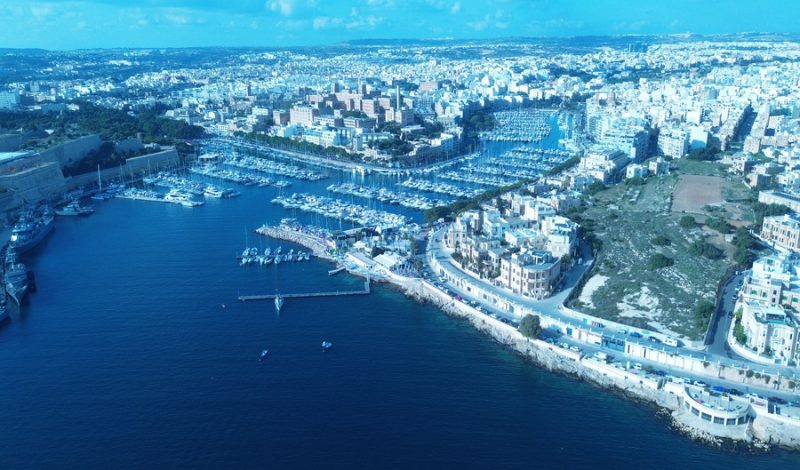
In the case of Transport Malta’s application for the Ta’ Xbiex Capitanerie project, the court was clear. It ruled that Transport Malta, as an external consultee, was in a conflict of interest, as it was both the applicant and the entity responsible for providing expert technical advice. The court annulled the permit on this basis, emphasizing that consultations should be conducted with independent entities, rather than with the same party that imposes conditions upon itself and is subsequently responsible for monitoring those conditions. The court stated that no party should serve both as the applicant and as the consultant providing professional and technical advice regarding the merits of the development. The court further noted that while Transport Malta’s submission, consisting of various departments within the entity, did not lead to favourable arguments for the applicant, the departments still fell under the same entity, Transport Malta.
In its ruling, the court stated:
‘Dan l-aggravju hu siewi wkoll. L-Awtorita tat-Trasport hi wahda mill-konsulenti esterni u hi l-applikant infisha. Ghal finijiet ta’ korrettezza u trasparenza l-konsultazzjoni kellha issir ma’ enti specjalizzata, indipendenti u mhux mal-istess parti li imponut fuqha kundizzjonijiet li hi stess trid tissorvelja. L-Awtorita u t-Tribunal mhux marbuta bir-rapporti ta’ konsulenti esterni, ghalkemm jekk mhux ser jigu segwiti dan irid jigi motivat. Madankollu l-kwistjoni hawnhekk hi dwar principju legali li hadd ma ghandu jkun parti u fl-istess hin il-konsulenti li jaghti l-parir professjonali u tekniku dwar il- merti tal-izvilupp innifsu. Is-sottomissjoni ta’ Transport Malta li hi maghmula minn diversi dipartimenti li jridu jaghtu l-kunsens taghhom ma twassal ghal ebda argument favorevoli ghall-applikant billi fl-ahhar mill-ahhar id-dipartimenti xorta jaqghu fi hdan entita wahda cioe Transport Malta’.
If we were to adhere to this ruling, it follows that when current external consultees occupy both the roles of applicant and consultant, a conflict of interest arises. The implication is that it would be safer if these consultees are treated as regular interested third parties, rather than being formally consulted, in case one day they themselves decide to submit a planning application.
However, a persistent issue remains when the Planning Authority itself is the applicant, as seen in the 2019 case. In such instances, the potential for conflicts is not easily mitigated, unless Parliament enacts legislation to assign the responsibility for planning decisions to an alternative entity in cases where the Planning Authority is the applicant.