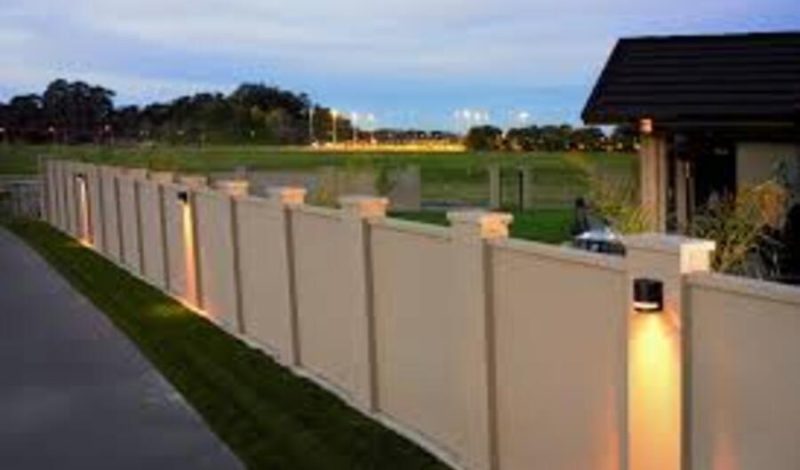
Disputes over dividing walls often drift unnecessarily into questions of civil ownership. Planning law, however, is concerned with something far more modest and far more precise: whether the statutory requirements governing ownership declarations and consent have been respected at the moment an application is submitted.
The difficulty arises where a boundary wall is proposed on the median line between two plots of land, so that part of the wall will necessarily occupy land that does not belong exclusively to the applicant. In such a scenario, the planning system is not being asked to decide who owns the boundary or whether the wall is civilly lawful. It is being asked a narrower question: has the applicant lawfully satisfied the ownership or consent requirements imposed by the Development Planning Act?
Where an applicant declares sole ownership, yet submits plans showing that half the thickness of the proposed wall lies on the neighbour’s land, the problem is not theoretical. It is a concrete inconsistency between the declaration and the physical extent of the works. If no consent has been obtained, the statutory route under Article 71(4) has simply not been followed. In those circumstances, the defect lies in the application itself, not in the civil status of the wall.
What is often overlooked is that this difficulty is entirely avoidable. If an applicant lacks the neighbouring owner’s consent, the lawful solution is not to force the issue through planning by relying on a sole-ownership declaration that the plans do not support. The lawful solution is to confine the proposed development strictly within the applicant’s own land. In practical terms, this means drawing only half the wall which lies on the applicant’s side of the dividing line.
Once the proposal is limited to land that is unquestionably owned by the applicant, the statutory inconsistency disappears. The applicant can truthfully declare sole ownership, the planning authority can assess the proposal on its planning merits, and the neighbour’s civil rights remain untouched. Planning law does not require symmetry; it requires legality.
This approach respects the proper boundaries between planning and civil law. Planning authorities are not converted into arbiters of property disputes, and neighbours are not forced into litigation simply because a planning application has been framed too aggressively. At the same time, applicants are not deprived of the ability to develop; they are merely required to do so within the limits of their own title, unless and until consent or authorisation is obtained.
The broader lesson is a simple one. Where consent is absent, the burden lies on the applicant to adapt the proposal — not on the planning system to overlook a statutory defect. A boundary wall ‘cut short’ may be less elegant on paper, but it is legally coherent. And in planning law, coherence is often the difference between a valid permit and one that cannot stand.