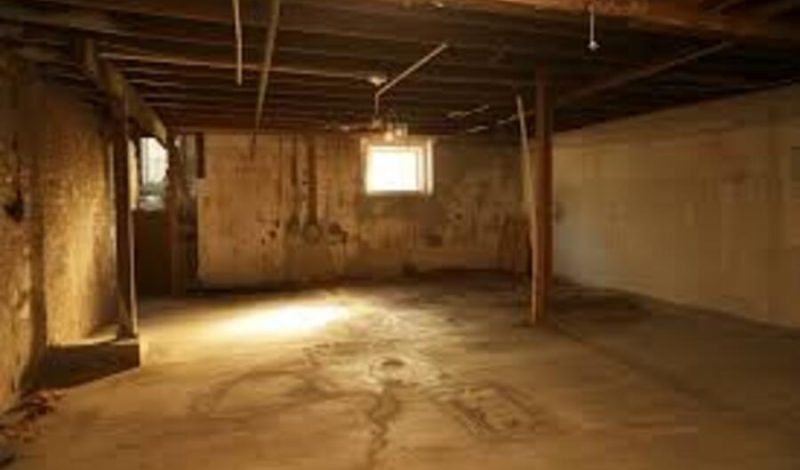
Basement restrictions in residential planning are often misunderstood and applied mechanically, as though any residential space located below street level is inherently unacceptable. That reading overstates what DC15 actually seeks to regulate. The policy framework is not designed to prohibit all accommodation that extends below street level, but to guard against genuinely substandard dwellings that are functionally and spatially basement units.
Policy P38 is directed at a specific mischief. It treats as unacceptable those residential units that are separate dwellings located entirely, or effectively, at basement level, on the basis that such accommodation typically fails to provide adequate living conditions. The policy’s concern is therefore qualitative and functional, not purely geometric. It does not outlaw ground-floor units which, because of topography, sloping streets, or existing urban form, happen to sit partially below the level of the road.
The correct legal and planning question is thus not whether any part of a residence falls below street level, but whether the dwelling is, in substance, a basement unit. A ground-floor residence that extends below street level in part does not automatically fall foul of the policy. To apply the restriction by attaching a label rather than undertaking a proper classification exercise would convert a targeted safeguard into a blanket prohibition—one that DC15 itself does not establish.
The same analytical discipline is required when amenity is invoked as a separate or additional reason for refusal. Policy P45 does not operate on assumptions or shorthand. It sets out a structured framework for assessing residential quality, requiring developments to achieve acceptable standards of amenity and accommodation. In doing so, it directs attention to tangible design considerations such as access to light, ventilation, outlook, and the environmental quality of living spaces, rather than to abstract categorisations.
Within that framework, the absence of outlook or the failure to provide reasonable levels of privacy can render a residential proposal unacceptable. But those conclusions must be reached through an assessment of the actual spatial and environmental characteristics of the unit as designed. They do not follow automatically from describing a unit as “basement”. Amenity is not a label; it is an evaluative outcome grounded in drawings, sections, orientation, and context.
The point, therefore, is a simple but important one. Residential amenity cannot be presumed to be deficient merely because part of a unit lies below street level.