Historic stone buildings often give the impression of permanence. Their thick masonry walls, monumental proportions, and enduring presence in the landscape suggest a material capable of resisting time almost indefinitely. Yet the reality is more nuanced. Stone structures age slowly through a series of subtle physical and chemical processes that, while often invisible at first, gradually shape the condition of the material. Understanding these processes does not require dramatic theories of structural failure- rather, it involves recognising the modest but persistent mechanisms through which the environment interacts with stone.
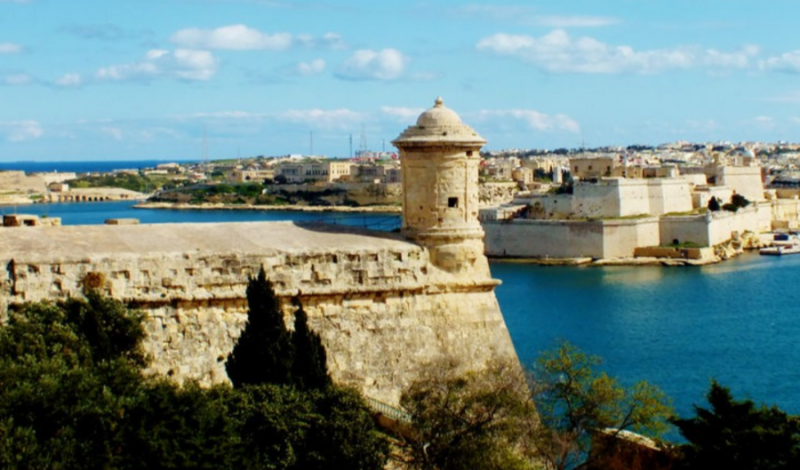
In the Maltese Islands this discussion acquires a particular relevance. The majority of traditional buildings are constructed using Globigerina limestone, a sedimentary stone that has shaped the architectural character of the islands for centuries. Its widespread use reflects both geological availability and practical advantages: the stone is relatively soft when freshly quarried, easy to cut and carve, and sufficiently durable to perform well in structural masonry. These qualities explain why it became the dominant building material across Malta’s towns and villages, forming the fabric of everything from modest rural houses to the elaborate urban architecture of historic settlements.
Yet the same characteristics that make Globigerina limestone workable also influence how it responds to environmental exposure. The stone possesses a relatively porous internal structure consisting of networks of microscopic voids. This porosity allows the material to absorb and release moisture, a property that can assist the natural regulation of humidity within masonry walls. At the same time, however, the movement of moisture through the pore structure creates the conditions under which long-term weathering processes may develop.
A useful starting point for understanding these processes lies in distinguishing between ordinary weathering and more serious decay. Weathering refers to the gradual changes that occur when building materials are exposed to natural conditions such as sunlight, rainfall, temperature variation, and wind. These changes may alter the appearance of the stone surface through discoloration or minor textural variations without necessarily affecting the structural stability of the material. Decay, by contrast, involves the progressive weakening or loss of stone fabric itself. The distinction is subtle but important, since not every visible change on a historic façade indicates a problem requiring intervention.
Stone deterioration rarely arises from a single identifiable cause. Instead, it usually reflects the combined influence of environmental exposure, the inherent properties of the stone, and the architectural context in which the material is used. The orientation of a façade, the presence of sheltered areas, or the proximity of the building to the sea may all influence how the stone responds to external conditions. As a result, the ageing of masonry often appears uneven, with certain portions of a structure remaining relatively intact while others display more noticeable signs of wear.
The physical structure of the stone itself plays a decisive role in this process. The pore networks within porous limestone allow water to penetrate into the material and subsequently evaporate back into the surrounding air. This cycle of absorption and evaporation is a normal aspect of the behaviour of many building stones. However, the same pathways through which water moves may also transport dissolved substances originating from soil moisture, atmospheric particles, or marine aerosols.
Moisture is therefore one of the most significant factors influencing the long-term condition of masonry. Water may enter stone through rainfall, atmospheric humidity, ground moisture, or condensation forming on cooler surfaces. When this moisture carries small quantities of soluble salts into the pore structure of the stone, further changes may occur during the evaporation phase.
As moisture evaporates from the stone surface, the dissolved salts can crystallise within the pores of the material. This process is typically slow and repeated many times over long periods. Each cycle of dissolution and crystallisation exerts small stresses on the surrounding stone matrix. Over decades, these stresses may contribute to the gradual weakening of the outer layers of the material, occasionally producing surface powdering or the detachment of thin flakes. Such phenomena are commonly observed on historic limestone buildings and should often be understood as part of the material’s long-term interaction with its environment rather than as evidence of sudden structural failure.
Environmental gradients further influence the development of these processes. Moisture does not distribute itself uniformly within masonry walls but tends to move along gradients determined by evaporation rates, rainfall exposure, and the presence of ground moisture. This movement can produce visible patterns of weathering across a façade. Lower portions of walls may display signs associated with rising damp, while intermediate zones may correspond to areas where evaporation is most active. Higher levels of a façade may instead be influenced more strongly by direct rainfall or wind exposure.
Microclimatic conditions surrounding a structure also play a role in shaping the ageing of stone. Factors such as façade orientation, shading from neighbouring buildings, the presence of projecting architectural elements, or proximity to the sea may significantly influence local humidity and temperature conditions. In coastal environments, for instance, airborne sea spray may introduce additional salts into exposed masonry surfaces. These variations mean that different parts of the same building may age in noticeably different ways.
Human intervention can also influence the behaviour of historic masonry. Repairs and maintenance carried out over the life of a building may introduce materials that interact differently with the original stone fabric. Some modern repair materials are less permeable than traditional masonry components, potentially altering the way moisture migrates through the wall. In certain situations this can encourage moisture retention within the stone, subtly modifying the long-term weathering pattern.
For this reason, careful observation of deterioration patterns forms an important part of understanding historic buildings. By examining how weathering manifests itself across different areas of a structure — whether through slight surface powdering, minor fissures, or localised material loss — it becomes possible to interpret the environmental and material conditions influencing the masonry. These observations do not necessarily signal structural instability- rather, they help reveal the quiet processes through which stone responds to its surroundings.
In many respects, the ageing of stone architecture is a gradual and continuous phenomenon rather than a sudden event. The interaction between porous limestone, moisture, temperature, and environmental exposure unfolds slowly over decades or centuries. Appreciating these modest mechanisms allows architects, engineers, and conservation professionals to approach historic masonry with greater sensitivity. Instead of attempting to eliminate every visible sign of ageing, the objective becomes to understand and manage the conditions that influence the long-term behaviour of the material.
Seen in this light, the surfaces of Malta’s limestone buildings tell a story not only of architectural craftsmanship but also of environmental interaction. Their subtle weathering patterns record the cumulative effects of climate, materials, and time. Recognising these quiet processes encourages a conservation approach grounded not in abrupt intervention but in careful understanding of the natural behaviour of stone.