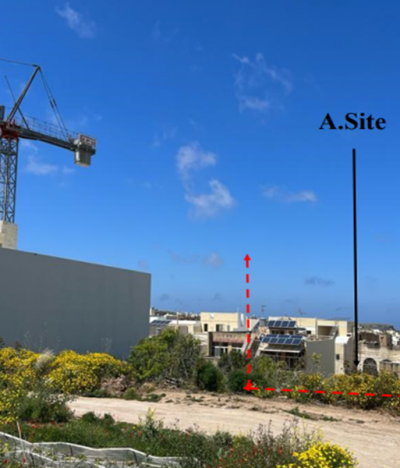
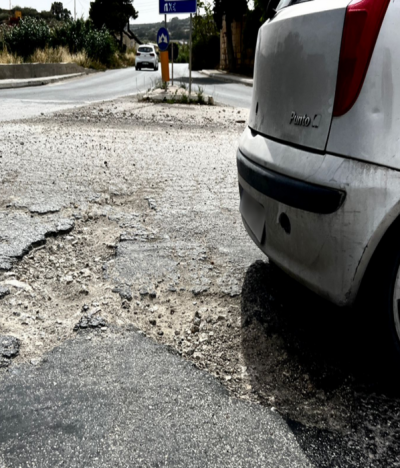
Regularisation applications often raise a deceptively simple question: who must show that a development does not harm its surroundings? At first glance, one might think that the Planning Authority must establish the existence of such harm before refusing regularisation. After all, the regulation itself appears to place the emphasis on the Authority’s judgment.
Regulation 4(5) of Subsidiary Legislation 552.26 [The Regularisation Legal Notice] provides that development may be regularised only if:
“fl-opinjoni tal-Awtorità, l-iżvilupp ma jikkostitwixxix ħsara lill-amenity.”
[Translation: “in the opinion of the Authority, the development does not constitute an injury to amenity.”]
The wording is noteworthy. The regulation frames the test expressly in terms of the Authority’s opinion. The law therefore requires the Authority to form a view on whether the development harms amenity. On its face, the provision does not say who must prove that such harm does or does not exist.
A recent judgment of the Court of Appeal has clarified how this provision operates in practice. In Maria Tabone vs L-Awtorità tal-Ippjanar (4 December 2025), the appellant argued that the Tribunal had erred in expecting her to prove that the development did not constitute an “injury to amenity”. She contended that such a requirement involved an impossible proof of a negative fact.
The Court rejected that argument and reaffirmed a basic procedural rule:
“Bħala prinċipju ġenerali, huwa dejjem l-applikant li għandu jikkonvinċi lill-Awtorità li l-elementi kollha neċessarji għas-suċċess tal-applikazzjoni huma sodisfatti.”
[Translation: “As a general principle, it is always the applicant who must convince the Authority that all the elements necessary for the success of the application are satisfied.”]
In other words, the Court accepted that the Authority must ultimately reach the opinion required by the regulation, but it is the applicant who must provide the material capable of persuading the Authority to reach that conclusion.
The Court also dismissed the suggestion that the requirement involved an impossible evidential burden. Referring to classical procedural doctrine, it noted:
“In verità, qualunque negativa… si risolve sempre in una o più affermative di fatti contrari.”
[Translation: “In truth, any negative proposition ultimately resolves itself into one or more affirmative statements of contrary facts.”]
This means that the absence of injury to amenity does not need to be demonstrated through abstract proof of a negative. It can be shown through positive evidence indicating that the development sits comfortably within its context.
At the level of principle, this approach is difficult to dispute. Regularisation is an exceptional procedure through which an applicant seeks to legitimise development that already exists outside the normal permitting process. It would be difficult to justify a system in which the Authority had to prove harm before refusing such a request. Yet the case also highlights a practical issue that remains somewhat unresolved. The regulation identifies the condition for regularisation — the absence of injury to amenity — and the Court clarifies who must carry the burden of persuasion. What the legal framework does not clearly explain is what type of evidence normally suffices to discharge that burden.
In practice, applicants might attempt to demonstrate the absence of harm through contextual planning analysis, streetscape drawings, photographic surveys, or expert planning opinions showing that the development does not adversely affect its surroundings. In some cases, comparisons with neighbouring developments may also help illustrate that the proposal does not disrupt the character of the area.
None of this contradicts the Court’s reasoning. The Authority must ultimately form the opinion required by the regulation, but the applicant must place before it the material capable of supporting that opinion.