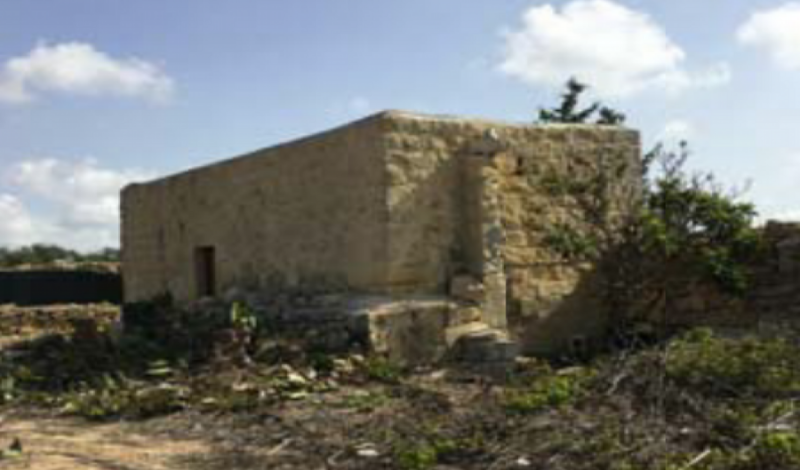
Applications involving the rehabilitation of rural structures often stand or fall on the interpretation of Policy 6.2A of the Rural Policy and Design Guidance (RPDG 2014). A recent judgment of the Court of Appeal concerning a development proposal in Marsascala provides a useful illustration of how disputes under this policy may ultimately turn on the way an appeal is framed.
The case concerned an outline development permit for the restoration of ruins and alterations to a dwelling. The Planning Commission had approved the proposal after referring to documentary material which it considered indicative of historical residential use. The matter was subsequently challenged before the Environment and Planning Review Tribunal.
The Tribunal examined the requirements of Policy 6.2A, which governs the rehabilitation of buildings located outside the development zone. The policy provides, inter alia:
“Permission may be granted for the rehabilitation of an existing building located outside development zone, provided that all of the following criteria are satisfied:
(1) the applicant can sufficiently prove that the building is covered by development permission, or that it is a pre-1978 building;
(2) the converted building shall be limited to:
a) a use already legally established and/or covered by a development permission.”
The Tribunal observed that the only documentary reference to residential use dated back to 1935. Although aerial photographs confirmed the presence of structures on the site in 1978, the Tribunal considered that this did not establish that the residential use remained legally established. On that basis it concluded that the proposal could not satisfy criterion 2(a) of the policy.
The Tribunal then examined whether the proposal could fall under criterion 2(d), which permits conversion into a dwelling even where the former use was not residential, provided that the existing building has a minimum habitable area of 100 square metres. Since the structures on the site measured only about 28 square metres, the Tribunal held that the proposal did not meet that requirement either.
When the case reached the Court of Appeal, the permit holder attempted to challenge this conclusion by arguing that the Tribunal had failed to give proper weight to the evidence demonstrating residential use. The Court declined to intervene and characterised the complaint as one relating solely to the appreciation of evidence.
In the words of the Court:
“Dan l-aggravju, fil-fehma tal-Qorti, huwa wieħed li jolqot esklussivament il-mod kif it-Tribunal apprezza l-provi miġjuba quddiemu, u ma fih assolutament l-ebda punt ta’ dritt li dwaru trid tiddeċiedi din il-Qorti.”
[Translation: “This ground of appeal, in the Court’s view, concerns exclusively the manner in which the Tribunal assessed the evidence produced before it, and contains absolutely no point of law which this Court is required to determine.”]
The appeal was therefore dismissed.
Yet the case also highlights an interesting point concerning the interpretation of Policy 6.2A itself. Criterion 2(a) refers to “a use already legally established.” The wording of the policy does not expressly require proof that the use continued uninterrupted over time. Instead, it refers to the legal status of the use.
The Tribunal appears to have approached the matter by asking whether the residential use could be shown to have remained in existence over time. However, a different reading of the policy might ask a slightly different question: whether the residential use had been lawfully established at some point in time, regardless of whether the building later fell into disuse.
The distinction is not merely semantic. In planning law a use may remain legally established even if the building has been abandoned or has deteriorated physically. What normally matters is whether the use was lawfully created in the first place.
If the issue had been framed before the Court of Appeal as a question concerning the interpretation of the phrase “legally established use”, rather than as a disagreement about the weight of the evidence, the Court might have been required to consider whether the Tribunal had applied the correct legal test.
The case therefore offers a practical reminder about the structure of planning appeals. The Tribunal remains the forum where evidence is evaluated. The Court of Appeal intervenes only when a question of law arises. Where an appellant challenges only the Tribunal’s appreciation of evidence, the appeal will rarely succeed.
At the same time, the judgment highlights how closely the outcome of such cases may depend on the precise way in which Policy 6.2A is interpreted and applied.