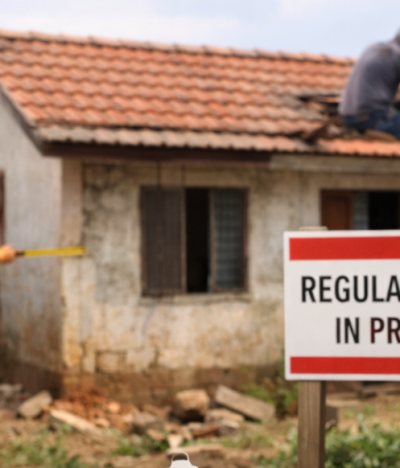
In the context of development planning law, a recurring challenge for applicants is demonstrating that an existing building—often disused or in a state of disrepair—was historically used as a residence. This issue commonly arises in the context of structures located outside development zones (ODZ), but the underlying considerations apply equally to other settings. While the burden of proof remains with the applicant, planning decisions consistently suggest that, where credible documentation is presented, the decision organs would be willing to recognise long-standing use that may not have been formally recorded under modern regulatory frameworks.
Yet, the evidentiary threshold is not low. Mere claims of past use, unsupported by verifiable material, are rarely sufficient. However, where a structured body of documentation is available, applicants may succeed in establishing that the building in question served as a dwelling at an earlier time. This is particularly relevant in cases where the proposed development does not seek to introduce a new use, but rather to rehabilitate and adapt an existing structure in line with its historical function.
Certain types of evidence have emerged as particularly useful. Electoral registers from earlier decades may provide a concrete link between a named individual and a specific rural address. When combined with other civil records—such as death certificates identifying the place of death as the rural location in question—these documents can help construct a narrative of residential occupation. Similarly, notarial deeds may contain descriptive references to the structure, including references to rooms used “kumditajiet” or “razzett”, which, although not conclusive on their own, may acquire probative value when repeated across successive transactions.
The physical state of the building also plays a role. Where a structure remains largely unchanged in its footprint and layout over time—as evidenced through aerial photography or historical site plans—the continuity of form supports the argument that the use of the building has not been fundamentally altered. Moreover, such continuity mitigates concerns that the residential claim is merely a pretext for introducing new development into previously uncommitted land.
Ultimately, the strength of the case lies not in any single piece of evidence, but in the coherence and credibility of the application as a whole. A well-assembled file that includes registry entries, civil documents, historical photographs, consistent deed references, and an unaltered site layout can collectively demonstrate that a building was indeed used for residential purposes in the past. In such cases, the Planning Authority and, or the Planning Tribunal has shown a greater willingness to allow for restoration or limited adaptation of the building in line with present-day standards.
It is equally important to recognise the limits of this approach. Where the building’s history cannot be traced, or where significant physical alterations have severed the link with past use, the chances of success diminish considerably.
The truth is that planning law does not operate on conjecture.