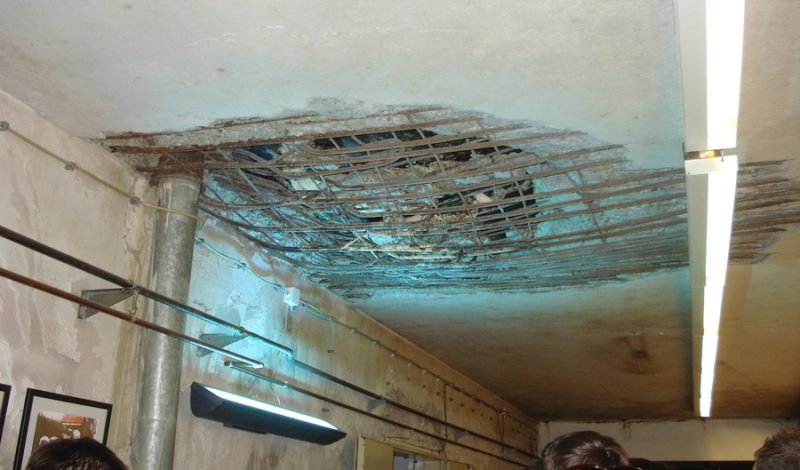
In the sale of immovable property, hidden defects can turn a seemingly sound investment into a legal and financial burden. Maltese law, under Chapter 16 of the Civil Code, provides buyers with certain protections—but these are not indefinite. The law expects both parties to act with prudence, and imposes strict legal timelines within which claims must be made.
Under Article 1431(1) of the Civil Code, a buyer who discovers defects that were not visible or discoverable at the time of purchase may institute the actio redhibitoria (to annul the sale) or the actio aestimatoria (to seek a reduction in the purchase price). In the case of immovable property, this action must be brought within one year from the date of the contract.
However, Article 1431(2) introduces a necessary qualification: where the buyer could not have discovered the defect earlier, the one-year period begins not from the date of the contract, but from the date on which the defect could reasonably have been discovered. This is an objective standard. The law asks not when the buyer did in fact become aware, but when the buyer should have become aware through ordinary diligence.
This has serious consequences. If warning signs arise—such as unusual cracks, leaks, or structural instability—the buyer cannot delay. Even if the full extent of the defect is unclear, the clock may already be ticking. Once a reasonable person would have been put on enquiry, the one-year period begins to run. The law imposes this time limit as one of peremptory effect—it is a period of dekadenza, not mere prescription. That is to say, it cannot be paused.
A further layer of complexity is introduced by contractual terms such as the phrase “tale quale,” often inserted to indicate that the property is sold “as is.” Many believe that such a clause exempts the seller from all liability. But Article 1427 of the Civil Code provides that a seller remains liable for hidden defects unless there is an express and unequivocal agreement that waives this guarantee. Maltese courts have consistently held that the term “tale quale” is not, in itself, sufficient to exclude the seller’s responsibility for latent defects.
Therefore, a seller who covers up damage with cosmetic repairs, or fails to disclose serious underlying issues, may still be liable, even if the contract includes a general clause of “tale quale.” Conversely, a buyer who notices signs of a problem but fails to investigate—or who delays in filing a claim once the issue is apparent—may lose the right to any legal remedy altogether.
In practice, these rules strike a delicate balance. They protect buyers from deception or hidden damage, while also encouraging vigilance and prompt action. The law does not reward the passive or inattentive; it expects buyers to act within the time limits, and sellers to act in good faith.
In short, Articles 1427 and 1431 reflect a broader legal principle: the protection of contractual certainty. Once enough time has passed for reasonable doubts to be investigated, the law draws a line. Claims made after that line are time-barred—even if the defect was real, and the damage significant.